Australia’s Most Intelligent Asset Registers

Asset Data Capture FAQs
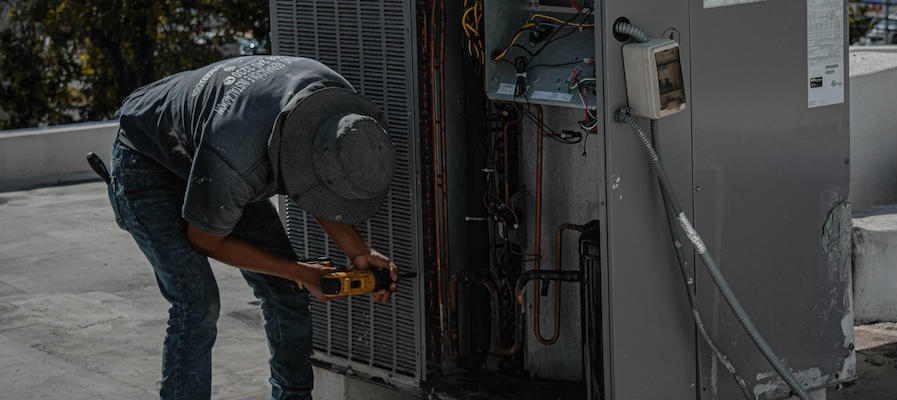
Kairos have spent nine years capturing asset data across Australia – hospitals, schools, retail, councils. Here is a list of the most common questions asset and facility managers ask us about asset data capture.
Jump to question…
What is asset data capture?
It’s systematically identifying, documenting, photographing and assessing every maintainable asset across your facilities. We’re talking HVAC, electrical, plumbing, fire systems, lifts, generators – anything that requires maintenance and impacts your operations when it fails.
You’re building a structured dataset that feeds your CMMS so you can make informed decisions about maintenance scheduling, capital planning and replacements.
Why do I need an asset register?
Without reliable asset data, you can’t answer basic questions. Which equipment fails most often? What’s actually due for replacement? Where should your capital budget go?
Your maintenance team spends their time reacting to failures instead of preventing them. Your compliance is at risk because you can’t prove which assets have been maintained.
A proper asset register changes this. You can plan maintenance schedules, forecast capital requirements and prove compliance.
How do you create an asset register?
You start with alignment, not fieldwork. Before anyone walks a site, you need to understand what you’re capturing, how you’re structuring it and what success looks like. This means running workshops with stakeholders to confirm scope, data requirements, condition rating methodology and operational constraints.
Then you run a pilot audit. Usually half a day at a representative site to test processes, data capture templates and system configuration. This catches problems early when they’re cheap to fix, not six weeks into fieldwork when you’ve already audited 30 buildings.
Next comes standardisation. You pick a complete site that represents the typical complexity of the portfolio and audit it end-to-end. The whole audit team participates so everyone is capturing and assessing assets the same way. You review the outputs, incorporate stakeholder feedback and sign-off before rolling out to the full program.
Only then do you start the main audits. You walk every building, open every plant room and document every asset with the information the CMMS needs. You take photos. You structure the data according to what was agreed during alignment. You validate everything before leaving site because returning to fix errors is expensive.
Throughout fieldwork, you’re running daily QA checks while auditors are still onsite and weekly comprehensive reviews. You’re catching inconsistencies in real-time, not discovering them during CMMS import when it’s too late.
For example, at Kairos, we use an 8-stage gated process: alignment workshop, pilot audit, operational readiness, standardisation, audit commencement, ongoing QA, data delivery and closeout. We don’t progress to the next gate until the previous one is signed off.
What information goes in an asset register?
The exact fields depend on your CMMS and what information you actually need to maintain your assets and plan replacements. But typically you’re capturing identification data like asset ID, QR code, manufacturer, model, serial number and installation year.
You’re capturing location details – building, level, room and specific spatial location. Technical specifications including capacity, power ratings and maintenance requirements. Condition assessment with a rating scale, typically 1 to 5, documented defects and estimated remaining life.
You’re taking photos – context photos showing location and access routes, detail shots of nameplates and condition issues. And you’re documenting system relationships showing parent-child hierarchies and how assets relate to each other.
How long does it take?
It depends on your portfolio size, asset density and access constraints. A single building might take days. A hospital campus might take months. Every project is different.
What matters more than total duration is mobilisation time and operational disruption. You need upfront time for workshops to understand requirements, system setup and access protocols. During the audit, work happens in concentrated blocks to minimise disruption.
For facilities like hospitals or aged care where operations can’t stop, schedules get coordinated weeks ahead and confirmed well before arrival. For schools and councils, you work around term schedules and public access requirements.
Why not do this internally?
Your maintenance team is busy keeping things running. Asset audits get deprioritised every time something breaks or budget gets tight. Six-month projects can stretch into two years when internal teams don’t have dedicated time to finish.
There’s also an objectivity problem. Your team might be reluctant to document condition issues honestly when they’re responsible for maintenance.
And knowing how to maintain an asset doesn’t automatically translate to structuring data for a CMMS. Maintenance teams often understand their equipment perfectly but create datasets that won’t import cleanly or that lack the hierarchies needed for preventive maintenance scheduling.
What’s the difference between trade-qualified and regular auditors?
Regular auditors can identify obvious assets and write down nameplate information. They’ll see a chiller, note the manufacturer and model, take a photo and move on.
Trade-qualified auditors understand how building systems actually work. When they walk into a plant room and see a chiller, they’re validating that the entire system is captured correctly. That’s the chiller, yes, but also the cooling towers on the roof, the circulating pumps, the expansion tanks, the water treatment system and the BMS controls. They’re checking that the asset hierarchy reflects how the system actually functions.
This matters because your CMMS needs to understand asset relationships for maintenance scheduling. If you’re doing preventive maintenance on the chiller but your register doesn’t show the cooling towers or pumps, your maintenance planning is incomplete.
How do you ensure data quality?
Look for multi-layered quality assurance that catches errors while auditors are still onsite, not weeks later when you’re trying to import data.
The audit platform should have built-in validation rules that flag logical inconsistencies immediately. Chiller without a cooling tower? Age-condition mismatch? Missing mandatory fields? The system should alert the auditor on the spot so they can correct it before leaving site.
Trade-qualified auditors catch things regular auditors miss because they understand system interdependencies. If they’re documenting a medical gas system, they know what manifolds, outlets, zone valves and alarms should exist.
Look for providers who do daily QA reviews while auditors are still working on the project. Cross-referencing against expected asset densities, checking system completeness and flagging any inconsistencies. Then complete project-wide validation before handover with gap analysis, duplicate resolution and consistency checks.
For example, at Kairos, our Audify platform flags issues in real-time, our QA team reviews data daily while auditors are onsite, and we run a complete validation pass before delivering each week’s data.
What are your data submission timeframes?
Look for providers who deliver data progressively throughout the project, not just at the end. You want visibility into quality and progress as the work happens.
A weekly rhythm works well. The provider reviews the previous week’s data, you get regular updates and any issues get caught early when they’re cheap to fix. Finding out six months into a project that asset hierarchies are structured wrong is expensive. Finding out in week two means you adjust and keep moving.
For example, at Kairos, we deliver site audit data within 5 business days of completing each site, with any corrections turned around within 10 business days. You’re seeing progress weekly rather than waiting until project end to discover problems.
Can we track project progress in real-time?
Look for providers with proper project management systems. You should be able to see live progress – completion percentages by building, data quality metrics, condition rating distributions and exception items requiring attention. Accessible from your phone or laptop anywhere.
Good dashboards flag asset density discrepancies. If this building should have similar equipment to that building, why are the counts different? They show which systems have the worst condition ratings. They highlight gaps between what you expected to find versus what actually exists onsite.
This visibility means you’re making informed decisions throughout the project. If significantly more assets are being found than expected in certain buildings, you’re having that conversation in week three, not month six.
Can you integrate with our CMMS?
Look for providers who are software-agnostic. They should deliver data that works with your system, not force you to adapt to theirs.
The major platforms – QFM, TechnologyOne, Urbanise, Maximo and others – all have different requirements for hierarchies, mandatory fields and data structures. Your provider should configure their capture to match your requirements.
Custom taxonomies, bespoke hierarchies, specific field formats. The data should be captured the way your CMMS needs it. The dataset you receive should import cleanly without requiring transformation or manual cleanup.
What about operational constraints?
Look for providers experienced in live operational environments. Operating hospitals during surgery schedules, aged care facilities during meal service, prisons under strict security protocols, schools during term, councils during public hours. Working around operational constraints should be standard practice, not a special request.
During mobilisation, operational constraints get mapped. Access times, security requirements, clinical schedules, resident care priorities, public access considerations. Then audit schedules are built around them.
Look for providers who build buffer time for changes because facilities are unpredictable. If an ICU audit needs to postpone, they should be able to pivot to unrestricted areas and reschedule. Access should be confirmed well ahead of arrival because turning up unannounced is unprofessional and disrupts operations.
For example, at Kairos, we confirm arrival 48 and 24 hours before every visit.
What is Audify?
At Kairos, we built our own proprietary platform over nine years specifically for complex facility audits. It works without internet connection, which eliminates delays in basement plant rooms or regional sites. Built-in validation flags inconsistencies while auditors are still onsite. Custom fields and taxonomies match requirements exactly. Data exports in whatever format the CMMS needs.
We own and control it internally. When we need a feature, our developers build it. The platform has captured data across hospitals, schools, aged care, retail, government facilities, industrial sites, airport hangars, marine facilities and livestock operations.
What if you find more assets than expected?
This happens regularly. Existing asset data is often incomplete, or plant rooms have equipment that was never documented, or previous audits missed entire system components.
Look for providers who price on expected scope and build contingency. When additional equipment is discovered, work should continue without stopping to demand variations. Document it properly, note the variance in progress reporting and have a conversation about scope impact.
Progress reports should show actual counts versus expected quantities by asset type and location. If you’re tracking significantly over expected assets early in the project, you should know about it while there’s time to discuss approach.
How do you handle inaccessible assets?
Trade qualification helps. For concealed assets like underground infrastructure or above-ceiling distribution systems, trade-qualified auditors can infer presence based on visible endpoints and system logic. If there are outlets, there’s distribution infrastructure feeding them. If there’s a hot water system on level 3, there’s probably associated equipment on the roof.
For spaces requiring confined entry, working at heights or specialised access, you coordinate with your maintenance teams who have the necessary tickets and site familiarity.
For genuinely inaccessible assets – locked electrical rooms where keys are unavailable, ceiling spaces with asbestos concerns, roof areas that need fall arrest systems you don’t have – you document what’s visible and note access limitations in the dataset.
What about asset tagging?
Look for providers who supply and install QR codes or barcodes as part of the service. You’ll want different label types for different environments – standard adhesive for clean spaces, marine-grade for harsh conditions, discreet tags for heritage buildings.
Tag placement should be consistent. Always visible and accessible for inspections, positioned to avoid operational damage or removal during cleaning. Each installed tag should be photographed, proving it exists and showing exactly where to find it.
The tags should link to your asset register so scanning them pulls up maintenance history, specifications and documentation.
What safety protocols do you follow?
Look for auditors who hold relevant certifications. Elevated work platform licences, height safety, confined space awareness, asbestos awareness, general OHS.
Providers should maintain Safe Work Method Statements for every high-risk activity. Site-specific risk assessments should happen before any fieldwork. Every project should include compliance with your site induction requirements, appropriate PPE for the environment, documented emergency response procedures, incident reporting protocols and regular safety toolbox meetings.
Insurance coverage typically includes substantial public liability and professional indemnity. Ask for certificates of currency to meet your contractor management requirements.
How do you handle urgent safety issues found during audits?
For non-critical defects – equipment operating but approaching end of life, minor leaks, worn components – these get documented with photos and condition ratings so you can prioritise remediation based on risk and budget.
What deliverables do we receive?
You should receive structured asset data – complete dataset in your specified format, validation complete, ready for CMMS import, including high-resolution asset photos showing location, shots of nameplates and condition, etc..
The key deliverable is data you can actually use. It should import into your CMMS cleanly, photos should link correctly to asset records, and the information should be structured to support maintenance scheduling and capital planning.
Do you provide asset performance analysis beyond the raw data?
Many providers offer asset performance modelling across individual buildings or entire portfolios beyond just delivering the structured dataset.
This means you can identify which sites have the most critical condition issues, benchmark similar buildings against each other, drill down to root causes of performance problems and get specific recommendations for remediation priorities. Which assets should be in next year’s capital budget? Which can wait three years? What’s your portfolio-level replacement forecast looking like for the next decade?
The analysis supports capital planning discussions with boards and executive teams. You can show that a certain percentage of assets across the portfolio are in poor condition, concentrated in specific facilities, with estimated replacement costs if addressed now versus if deferred.
What communication should we expect during the project?
Look for providers who structure communication at multiple levels.
At the executive level, you’re getting strategic progress updates, quality metrics, risk assessment, budget tracking and timeline performance.
At the departmental level, weekly communications including operational impact updates and access coordination.
At the operational level, daily communications covering immediate access requirements, safety protocols and schedule adjustments.
The goal should be transparency without overwhelming you. You shouldn’t be surprised by project status, scope changes or data quality issues. Problems get flagged early while they’re manageable.
What’s the difference between asset data capture and condition audits?
Asset data capture identifies and documents every maintainable asset for CMMS population. You’re building a complete register of what exists, where it’s located, key specifications and basic condition assessment. It’s comprehensive coverage across all assets.
Condition audits go deeper on each individual asset. Detailed remaining useful life calculations, comprehensive defect documentation, failure mode analysis, replacement cost estimates and prioritisation. More time per asset, more engineering assessment, higher cost. Critical for capital planning but different scope.
Compliance inspections like Essential Safety Measures are different again. Regulatory-focused assessments confirming building code compliance, typically annual or periodic requirements.
For most organisations implementing or upgrading a CMMS, you need asset data capture first to populate the system with complete asset records. Then condition audits to inform your capital planning for assets approaching end of life. Then ongoing compliance inspections to maintain regulatory requirements.
How do we get started?
Focus on three things when evaluating providers.
Trade qualifications. Do their auditors understand building systems, or are they just data entry with clipboards?
QA methodology. How do they prevent errors during capture, not just find them during post-project review when fixing them requires return visits?
CMMS integration. Have they delivered data for your specific platform before, or are you the test case for their integration?
If you’re ready to discuss your specific requirements, get in touch with Kairos. We’ll talk through your portfolio, CMMS requirements, operational constraints and timeline. Then we’ll give you a straight answer on whether we’re the right fit and what it’ll actually take to get you reliable asset data.